1

Country: Norway | Funding: $13.1M
Zelluna Immunotherapy is developing a unique and proprietary TCR-NK cell therapy platform for the treatment of cancer. The therapy utilizes human (donor) natural killer (NK) cells, driven by T-cell receptors (TCRs), which are administered to patients. TCRs provide precise targeting of cancer cells and enable NK cells to find and destroy cancer cells within the patient's body. Zelluna's development pipeline targets a combination of clinically or preclinically validated antigens expressed in a broad range of solid tumors, providing high potential for patient impact and a significant market opportunity. The company's undergoing clinical trials include the following indications: NSCLC, ovarian cancer, sarcoma, breast cancer, gastric cancer, lung cancer, pancreatic cancer, cervical cancer.
Zelluna Immunotherapy is developing a unique and proprietary TCR-NK cell therapy platform for the treatment of cancer. The therapy utilizes human (donor) natural killer (NK) cells, driven by T-cell receptors (TCRs), which are administered to patients. TCRs provide precise targeting of cancer cells and enable NK cells to find and destroy cancer cells within the patient's body. Zelluna's development pipeline targets a combination of clinically or preclinically validated antigens expressed in a broad range of solid tumors, providing high potential for patient impact and a significant market opportunity. The company's undergoing clinical trials include the following indications: NSCLC, ovarian cancer, sarcoma, breast cancer, gastric cancer, lung cancer, pancreatic cancer, cervical cancer.
2

Country: South Korea | Funding: ₩27B
Aston Sci develops cancer vaccines based on mRNA, DNA and peptides, which are currently being evaluated for efficacy in breast and gastric cancer. The company has created a cloud-based Collaborative Drug Discovery platform, powered by the Th-Vac AI epitope screening system and supported by an antigen-based epitope prediction program. Using the platform's results, the company performs precise immunological screening, enabling the identification of highly selective epitopes specific to MHC class II, known for their ability to induce strong and sustained CD4⁺ T-cell immunity. By integrating multi-omics datasets with machine learning, Th-Vac overcomes key barriers in the development of off-the-shelf vaccines encoding TAAs (tumor-associated antigens) or TCAs (tumor-specific antigens), as well as personalized neoantigen vaccines, including tumor heterogeneity, lengthy manufacturing lead times, and limited patient applicability.
Aston Sci develops cancer vaccines based on mRNA, DNA and peptides, which are currently being evaluated for efficacy in breast and gastric cancer. The company has created a cloud-based Collaborative Drug Discovery platform, powered by the Th-Vac AI epitope screening system and supported by an antigen-based epitope prediction program. Using the platform's results, the company performs precise immunological screening, enabling the identification of highly selective epitopes specific to MHC class II, known for their ability to induce strong and sustained CD4⁺ T-cell immunity. By integrating multi-omics datasets with machine learning, Th-Vac overcomes key barriers in the development of off-the-shelf vaccines encoding TAAs (tumor-associated antigens) or TCAs (tumor-specific antigens), as well as personalized neoantigen vaccines, including tumor heterogeneity, lengthy manufacturing lead times, and limited patient applicability.
3

Country: USA | Funding: $1.2B
Kura Oncology develops precision small-molecule drugs for treatment of solid tumors and blood cancers. The company discovers and tests new biomarkers of cancer signaling pathways. Kura's flagship drug, COMZIFTI, is approved for the treatment of adult patients with acute myeloid leukemia (AML) with a nucleophosmin 1 (NPM1) gene mutation whose AML has relapsed or failed to improve after previous treatment and who have no other satisfactory treatment options. The company's pipeline also includes clinical trials for acute lymphoblastic leukemia, acute myeloid leukemia, advanced gastrointestinal stromal tumors, renal cell carcinoma, non-small cell lung cancer, colorectal cancer, pancreatic ductal adenocarcinoma, and head and neck squamous cell carcinoma.
Kura Oncology develops precision small-molecule drugs for treatment of solid tumors and blood cancers. The company discovers and tests new biomarkers of cancer signaling pathways. Kura's flagship drug, COMZIFTI, is approved for the treatment of adult patients with acute myeloid leukemia (AML) with a nucleophosmin 1 (NPM1) gene mutation whose AML has relapsed or failed to improve after previous treatment and who have no other satisfactory treatment options. The company's pipeline also includes clinical trials for acute lymphoblastic leukemia, acute myeloid leukemia, advanced gastrointestinal stromal tumors, renal cell carcinoma, non-small cell lung cancer, colorectal cancer, pancreatic ductal adenocarcinoma, and head and neck squamous cell carcinoma.
4

Country: China | Funding: $370M
D3 Bio specializes in the development of innovative immunotherapies in oncology and immunology. The company's lead drug, elisrasib, is a next-generation KRAS G12C inhibitor that is being studied as a potential monotherapy for non-small cell lung cancer and metastatic colorectal cancer, as well as in combination with Merck KGaA's Erbitux anticancer drug or with immune checkpoint inhibitors. The company's pipeline includes clinical trials against mut cancers, CRC, PanCa, breast cancer, gastric cancer, bladder cancer and other solid tumors.
D3 Bio specializes in the development of innovative immunotherapies in oncology and immunology. The company's lead drug, elisrasib, is a next-generation KRAS G12C inhibitor that is being studied as a potential monotherapy for non-small cell lung cancer and metastatic colorectal cancer, as well as in combination with Merck KGaA's Erbitux anticancer drug or with immune checkpoint inhibitors. The company's pipeline includes clinical trials against mut cancers, CRC, PanCa, breast cancer, gastric cancer, bladder cancer and other solid tumors.
5

Country: Japan | Funding: ¥13.6B
AI Medical Service develops AI-based software and device to support endoscopic imaging of the stomach and detect gastric cancer. The company has already received certification (in Japan) for its AI-based endoscopic detection add-on device, which operates inside the stomach. The AI system analyzes endoscopic images of the stomach obtained by endoscopic equipment during an endoscopic examination. The device then detects areas in the images suspicious for early gastric adenoma and assists physicians in diagnosing these lesions by placing a frame within the image and playing a sound. These mechanisms help the observer to focuse attention, interpret the image and detect lesions.
AI Medical Service develops AI-based software and device to support endoscopic imaging of the stomach and detect gastric cancer. The company has already received certification (in Japan) for its AI-based endoscopic detection add-on device, which operates inside the stomach. The AI system analyzes endoscopic images of the stomach obtained by endoscopic equipment during an endoscopic examination. The device then detects areas in the images suspicious for early gastric adenoma and assists physicians in diagnosing these lesions by placing a frame within the image and playing a sound. These mechanisms help the observer to focuse attention, interpret the image and detect lesions.
6

Country: UK | Funding: $52M
Iksuda Therapeutics develops ADCs with enhanced tumor specificity. They incorporate tumor-specific, selective release and activation of payloads through mechanisms relevant to the target and tumor, thereby optimizing anticancer efficacy and improving patient safety. The company has also developed a new class of alkylating protein payloads, ProAlk. With their tailored properties to specific ADCs and broad applicability across various tumor types, Iksuda is currently developing a new ProAlk-ADC portfolio. The company's portfolio includes clinical trials against B-cell malignancies, breast cancer, gastric cancer, lung cancer, esophageal cancer, head and neck cancer, colorectal cancer and cervical cancer.
Iksuda Therapeutics develops ADCs with enhanced tumor specificity. They incorporate tumor-specific, selective release and activation of payloads through mechanisms relevant to the target and tumor, thereby optimizing anticancer efficacy and improving patient safety. The company has also developed a new class of alkylating protein payloads, ProAlk. With their tailored properties to specific ADCs and broad applicability across various tumor types, Iksuda is currently developing a new ProAlk-ADC portfolio. The company's portfolio includes clinical trials against B-cell malignancies, breast cancer, gastric cancer, lung cancer, esophageal cancer, head and neck cancer, colorectal cancer and cervical cancer.
7

Country: China | Funding: $20M
Developer of cancer therapies based on disease models intended to treat stomach and breast cancer. The company leverages disease models and artificial intelligence technology to develop cancer treatment.
Developer of cancer therapies based on disease models intended to treat stomach and breast cancer. The company leverages disease models and artificial intelligence technology to develop cancer treatment.
8
Country: Singapore | Funding: $9.1M
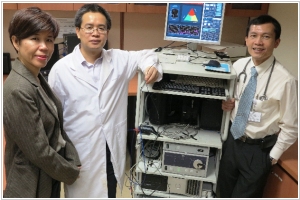
Endofotonics has developed SPECTRA IMDx - AI-based system, which enables real-time detection of early-stage gastric cancer during endoscopy. According to the company, it is the world's first and only in-vivo molecular diagnostic system using Raman spectroscopy for the early detection of gastric cancer. It acquires and analyzes molecular information related to cellular metabolic components when tissue molecules are excited by light energy directed at the tissue. The AI model is trained on clinical data to distinguish the molecular signatures of high-risk gastric lesions. The miniature SPECTRA IMDx probe is compatible with existing gastrointestinal endoscopes. The system provides objective feedback in real time, allowing the physician to focus attention and better analyze visual features.
Endofotonics has developed SPECTRA IMDx - AI-based system, which enables real-time detection of early-stage gastric cancer during endoscopy. According to the company, it is the world's first and only in-vivo molecular diagnostic system using Raman spectroscopy for the early detection of gastric cancer. It acquires and analyzes molecular information related to cellular metabolic components when tissue molecules are excited by light energy directed at the tissue. The AI model is trained on clinical data to distinguish the molecular signatures of high-risk gastric lesions. The miniature SPECTRA IMDx probe is compatible with existing gastrointestinal endoscopes. The system provides objective feedback in real time, allowing the physician to focus attention and better analyze visual features.
9

Country: Chile | Funding: $1.1M
Ilico Genetics is a subsidiary of the Pontificia Universidad Católica de Chile, that developed GastroMDx - liquid biopsy test for the early detection of gastric cancer. According to the company, it is the first methylated DNA-based molecular test specifically designed for the early detection of gastric cancer - detecting the disease years before the current "gold standard" esophagogastroduodenoscopy (EGD) can detect it. GastroMDx uses molecular biomarkers based on genetic and epigenetic signatures - subtle changes in DNA or RNA expression patterns - that can indicate the early presence of malignancy.
Ilico Genetics is a subsidiary of the Pontificia Universidad Católica de Chile, that developed GastroMDx - liquid biopsy test for the early detection of gastric cancer. According to the company, it is the first methylated DNA-based molecular test specifically designed for the early detection of gastric cancer - detecting the disease years before the current "gold standard" esophagogastroduodenoscopy (EGD) can detect it. GastroMDx uses molecular biomarkers based on genetic and epigenetic signatures - subtle changes in DNA or RNA expression patterns - that can indicate the early presence of malignancy.
10

Country: Finland
Targeted therapy for rare gastrointestinal cancer, GIST based on a discovery of novel drug targets in cancer and drug repositioning.
Targeted therapy for rare gastrointestinal cancer, GIST based on a discovery of novel drug targets in cancer and drug repositioning.